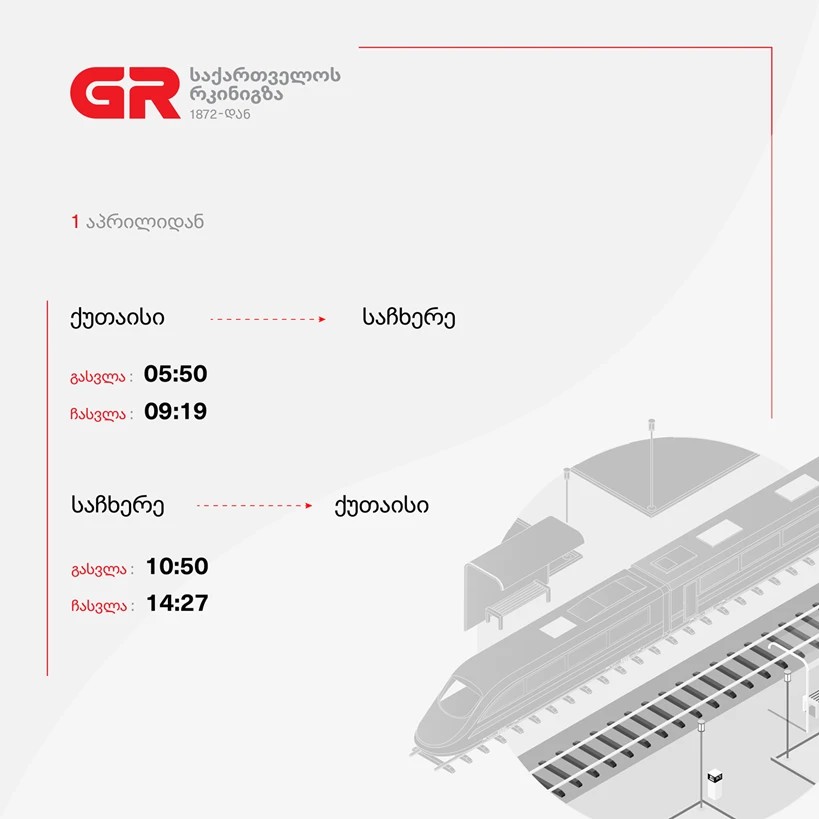
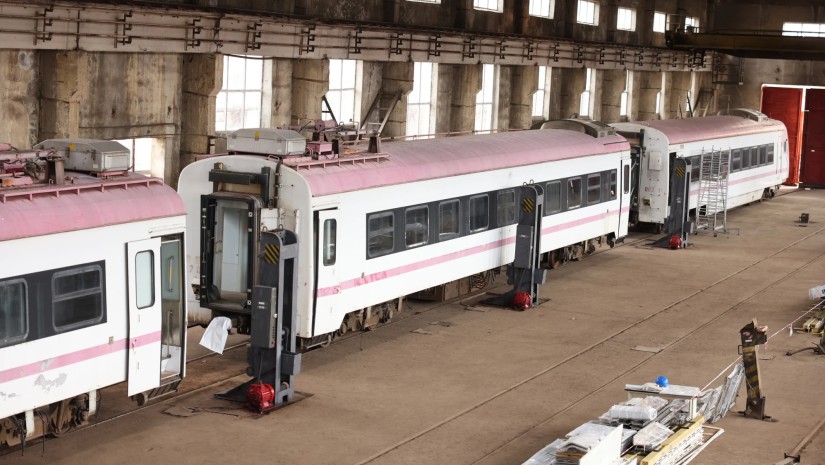
Tbilisi (GBC) – Georgian Railways will operate an electric train on the Kutaisi-Sachkhere-Kutaisi route from April 1, the railway announced.
1774607950

Tbilisi (GBC) – Georgian Railways will operate an electric train on the Kutaisi-Sachkhere-Kutaisi route from April 1, the railway announced.
სიახლეები ამავე კატეგორიიდან
Lion Finance Group (BGEO LN) shares closed at GBP 92.95/share (- 5.25% w/w and -9.32% m/m). More than 1.17mn shares traded in the range of GBP 90.85 - 100.50/share. Average daily traded volume was 112k in the last 4 weeks. The volume of BGEO shares traded was at 2.70% of its capitalization.TBC Bank Group (TBCG LN) closed the week at GBP 40.15/share (- 4.63% w/w and -13.93% m/m). More than 398k shares changed hands in the range of GBP 40.00 - 43.25/share. Average daily traded volume was 71k in the last 4 weeks. The volume of TBCG shares traded was at 0.71% of its capitalization.Georgia Capital (CGEO LN) shares closed at GBP 34.50/share (-1.15% w/w and +1.47% m/m). More than 297k shares traded in the range of GBP 34.45 - 37.00/share. Average daily traded volume was 64k in the last 4 weeks. The volume of CGEO shares traded was at 0.85% of its capitalization.
1774869217
Specifically, subscribers living in Tbilisi, who used to consume from 0 to 101 kilowatts of electricity per month and paid 15,041 tetri per kilowatt, will see their tariff increase to 20,041 tetri from April 1.As of today, the consumer tariffs are as follows:Tbilisi – from 0 kWh to 101 kWh inclusive and with a common consumption meter (household) – 15,041 tetriFrom 101 kWh to 301 kWh inclusive (household) – 19,053 tetriFrom 301 kWh and above (household) – 23,537 tetriRegions – from 0 kWh to 101 kWh inclusive and with a common consumption meter (household) – 14,731 tetriFrom 101 kWh to 301 kWh inclusive (household) – 18,708 tetriFrom 31 kWh and above (household) – 23.227 tetriThe Chairman of the Georgian Electricity Regulatory Commission, David Narmania, made a statement about the possible increase in electricity tariffs back on December 17, 2025. However, at a session held on December 29 of the same year, the Regulatory Commission changed the decision and extended the validity period of the existing tariffs by 3 months, until March 31, 2026.According to David Narmania, the postponement of the tariff change was due to several main factors: Applications from energy companies Unspecified electricity balances Consultations with the Government of Georgia As for natural gas, according to the decision of the Georgian Electricity Regulatory Commission, the tariff applicable to the mentioned resource will remain unchanged for one year and will be in force until December 31, 2026.
1774868931
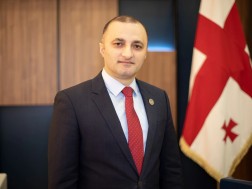
Expressing his gratitude, Gabaidze thanked the Georgian Dream party, its founder, and all its members, emphasising that his decision was made on personal grounds.He firmly denied rumours suggesting that his close ties to Tornike Rizhvadze influenced his resignation.“I have been contemplating this for a considerable time and have discussed it with my team. Having led the Supreme Council for less than ten years, I believe it is time for new directions. Regarding my connection with Tornike Rizhvadze’s team, it’s important to remember that I was appointed as Chairman of the Supreme Council before Tornike Rizhvadze assumed his role as Chairman of the Government,” Gabaidze explained.He also announced that he will soon relinquish his mandate as a member of the Supreme Council. While he did not disclose specific details, Gabaidze hinted that he has other opportunities ahead.Gabaidze was elected for a third term as Chairman of the Supreme Council following the most recent elections.
1774868852
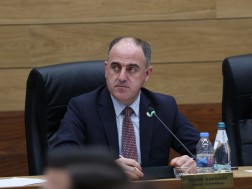
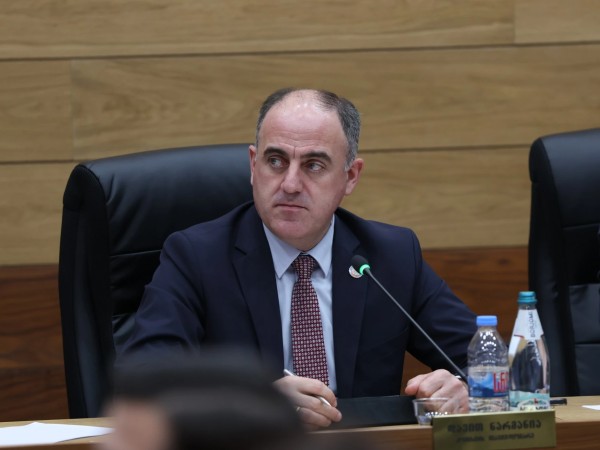
Before the meeting, Commission Chairman David Narmania explained the main components that influenced the tariff formation. According to him, one of the regulator’s main priorities is to minimize the number of accidents and power outages in the regions.According to Narmania, several important circumstances were taken into account when calculating the tariff:Investment component: In order to regulate the network in the regions, it is necessary to continue investment projects (in particular, by the company "Energo-Pro"), however, according to Narmania, it is important that these investments do not have a "significant impact" on the tariff.Dependence on imports: Electricity consumption in the country is constantly growing, which increases dependence on expensive imports. This directly affects the cost of energy.Energy balance: The commission specified the volumes of energy to be generated by generation facilities, which made it possible to determine the price for each type of station."The Department of Tariffs and Economic Analysis will present a presentation that will address both the impact of the investments made and the reflection of energy balances and supply components in the final cost," the Chairman of the Commission noted.Previously, the electricity tariff review was scheduled for December 2025. Davit Narmania had been announcing the expected price increase for months due to infrastructure needs, however, after Prime Minister Irakli Kobakhidze’s statement, who expressed hope for the tariff to be maintained, the commission decided on December 29 to extend the current tariffs for 3 months.Electricity tariffs were last changed in 2023, when the Commission reduced the tax for businesses and the population by 3 tetri.
1774858260

In 2025, the largest number of live births was recorded in Tbilisi (14 334) while the smallest – in Racha-Lechkhumi and Kvemo Svaneti Region (191).Compared to 2024, in 2025 the share of the first order births in total live births increased from 35.9 percent to 36.6 percent. The share of the second child decreased and equaled 32.9, while the share of the third and next order births remained almost unchanged and equaled 29.1 percent.Compared to 2024, in 2025 the share of live births for women aged 25-39 increased (from 69.5 percent to 70.4 percent) and decreased for women aged less than 25 (from 23.2 percent to 21.9 percent), while increasing for women aged 40 years and older (from 7.3 percent to 7.7 percent).In 2025, the number of deaths increased by 0.8 percent in annual terms and totaled 44 319 persons. The largest number of deaths was recorded in Tbilisi (12 743) while the smallest – in Racha-Lechkhumi and Kvemo Svaneti Region (585).According to the 2025 data, infant mortality rate (per 1 000 live births) equaled 7.6 ‰. The under-5 mortality rate (per 1 000 live births) in 2025 totaled 9.1‰.According to the 2025 data, the negative natural increase was stated in Georgia (the difference between the number of live births and the number of deaths) equaling -6 452. A negative natural increase was registered in all regions except Tbilisi, Adjara A.R. and Kvemo Kartli region.In 2025, 22 285 marriages have been registered, which is a 2.9 percent increase from the corresponding figure of the previous year. The mean age of first marriage in 2025 equals 30.1 years for females and 32.4 years for males.The number of divorces in 2025 equaled 13 173 decreasing by 2.6 percent compared to the previous year.
1774608061
Open Banking allows users to decide who they share their financial data with, when, and to what extent, while also enabling them to securely initiate payments from their preferred platforms. Data sharing and related services are carried out via standardized APIs, based on the user’s explicit and informed consent.The development of a modern digital financial ecosystem is one of the key priorities of the National Bank of Georgia (NBG), with Open Banking at its core. The foundation for this infrastructure was laid in the summer of 2019, followed by the establishment of a standardized framework that ensured the availability of account information sharing and payment initiation services through secure API channels. The system became operational in 2021, when commercial banks joined and began offering customers new products based on these services. In July 2024, the ecosystem expanded beyond the traditional banking sector. At that point, the first non-bank entity was authorized by the NBG to participate in Open Banking.Key indicators from the past year highlight this upward trend: 915,000+ transactions have been initiated through Open Banking. This reflects growing user trust in fast and secure payment methods and confirms that Open Banking is becoming an integral part of everyday financial life. 5,000+ uses of account information, payment initiation, and digital onboarding services. This reflects stable demand for innovative solutions that enable users to manage and control their finances more efficiently. 9.3 million+ total uses of Open Banking services. This scale demonstrates that the system has evolved into a solid and reliable foundation, ensuring the seamless operation of everyday digital financial services. Business interest in Open Banking opportunities is growing significantly. The ecosystem is not limited to traditional financial institutions and fintech companies it also creates new opportunities for the broader business sector, including retail and e-commerce.Both regulated entities of the NBG and organizations that were not previously subject to its supervision can participate in Open Banking. Upon meeting the relevant requirements, retail and other non-financial sector companies are able to provide Account Information Services (AIS) and Payment Initiation Services (PIS). In practice, this means that businesses can directly implement modern, fast payment methods on their own platforms. Since a transaction initiated through Open Banking is essentially an Account-to-Account payment, it significantly reduces the need for traditional intermediaries. As a result, businesses benefit from the advantages of an open ecosystem lower operational costs and increased security.For detailed information on the integration of Open Banking in e-commerce and the new advantages created for businesses, please refer to the NBG’s article: Open Banking in E-commerce: New Opportunities and Development Perspectives.Organizations wishing to join Open Banking should follow the “Regulation on Joining Open Banking.” Additional information on the regulatory framework is available on the website of the National Bank of Georgia.Those interested in Open Banking can contact the Innovation Office of the National Bank of Georgia at: innovationoffice@nbg.gov.ge.
1774607787
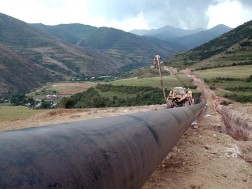
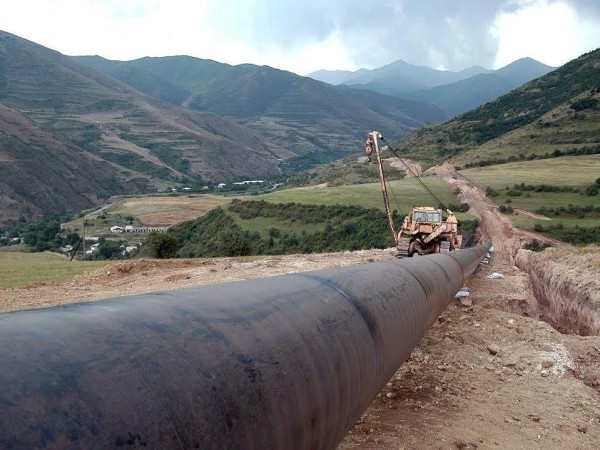
According to the documentation, the change in the location of the gas pipeline is related to the request of the Armenian side, since the Armenian section of the pipeline is located in the trilateral border zone of Georgia, Armenia, and Azerbaijan and was mined in the 1990s.According to the justification for the relocation, based on the fact that it is impossible to maintain minimum safety standards and carry out repair work on the given section, it was decided to remove the problematic section of the gas pipeline from the mined zone and build a new pipeline at a safe distance, based on a trilateral intergovernmental agreement.The gas pipeline will be moved several kilometers and will connect to a new pipeline laid by the Armenian side.
1774607634
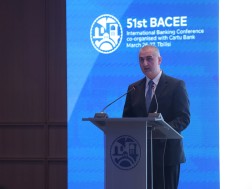
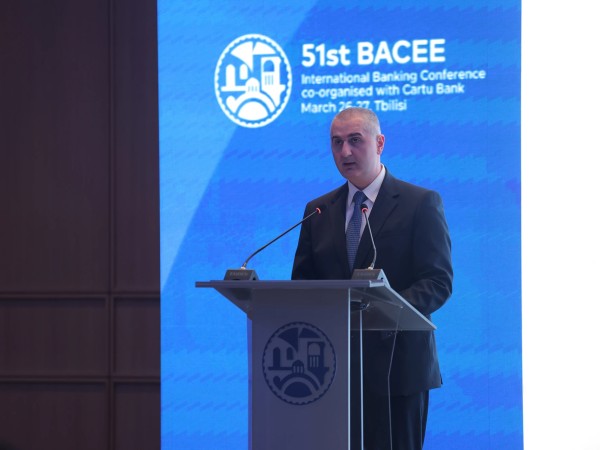
The Minister reviewed the latest macroeconomic indicators in detail and noted that in recent years Georgia has demonstrated resilience to various shocks and fiscal stability, as a result of which the average economic growth over the past five years amounted to 9.3%, while the medium-term forecast remains within 5%.According to Lasha Khutsishvili, per capita GDP has increased significantly and reached $31,000 in purchasing power parity, while the structure of the economy has become more focused towards services, including information technologies, tourism and education.Speaking about the fiscal sector, the Minister highlighted the sharp reduction in the deficit from 9.2% in 2020 to 1.4% in 2025, while the state debt ratio has reached 34% of GDP, which is significantly lower than the 60% limit set by law.Lasha Khutsishvili also noted in his speech that 93% of external debt is concessional loans from international institutions and the Ministry pays special attention to the development of the government securities market, for which new instruments are being developed to simplify access for non-resident investors.The Minister confirmed the Government’s commitment to the reform agenda, which includes the capital market, state-owned enterprises, tax administration and energy security, which will ultimately ensure the long-term sustainability of the country and the well-being of its citizens.
1774607239
Georgia’s Fruit Yields Are Two Times Less Than The EU Average – Galt &...
1773818621
Committee supports 3-fold increase of excise duty on cars older than 6...
1773739140
Flags lowered in tribute to memory of Ilia II outside Palace of Europe...
1774007597
Georgia's economy to grow by 7.5% in 2025 - Geostat
1774007789
Georgia receives condolences from around the world over the death of I...
1773836764