















Lion Finance Group (BGEO LN) shares closed at GBP 120.60/share (-4.13% w/w and -14.59% m/m). More than 307k shares traded in the range of GBP 119.30 - 127.00/share. Average daily traded volume was 61k in the last 4 weeks. The volume of BGEO shares traded was at 0.71% of its capitalization.TBC Bank Group (TBCG LN) closed the week at GBP 47.20/share (- 7.09% w/w and -10.94% m/m). More than 251k shares changed hands in the range of GBP 46.70 - 50.85/share. Average daily traded volume was 64k in the last 4 weeks. The volume of TBCG shares traded was at 0.45% of its capitalization.Georgia Capital (CGEO LN) shares closed at GBP 41.45/share (-2.59% w/w and -7.99% m/m). More than 185k shares traded in the range of GBP 40.40 - 43.40/share. Average daily traded volume was 37k in the last 4 weeks. The volume of CGEO shares traded was at 0.54% of its capitalization.
1793017348
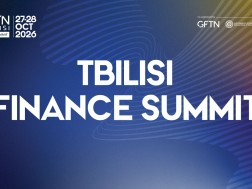
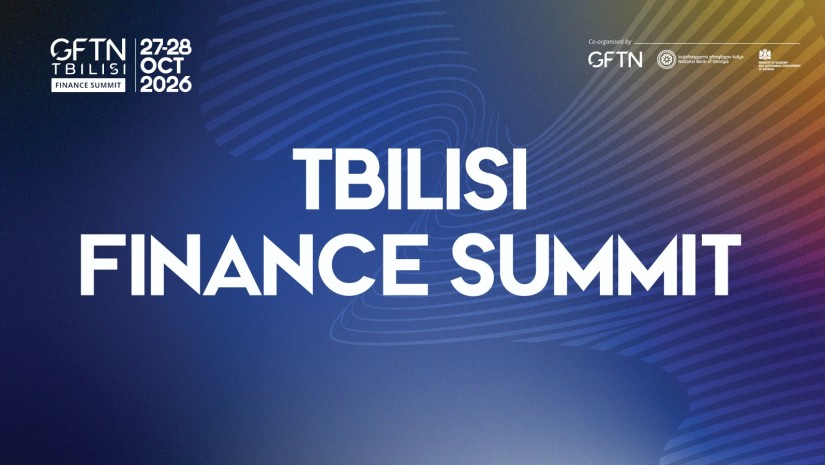
The summit will be opened by the Prime Minister of Georgia, Irakli Kobakhidze. Welcoming remarks will be delivered by Mariam Kvrivishvili, Vice Prime Minister and Minister of Economy and Sustainable Development of Georgia; Natia Turnava, Governor of the National Bank of Georgia; and Sopnendu Mohanty, Head of the Global Finance & Technology Network (GFTN).This year’s summit will feature over 800 participants from nearly 60 countries, along with approximately 100 high-level speakers. Participants in the summit include representatives from major companies such as Swift, UnionPay, Luma Group, Accel, Tether, and Ant International, among others. Also in attendance are Yang Jun, Executive Vice President of the Bank of China; Binur Zhalenov, Deputy Governor of the National Bank of Kazakhstan; Holta Zachaj, First Deputy Governor of the Bank of Albania; Mu Changchun, Director-General of the Digital Currency Research Institute at the People's Bank of China; Hovhannes Khachatryan, Deputy Governor of the Central Bank of Armenia; Emir Kurtić, Vice Governor of the Central Bank of Bosnia and Herzegovina; Zdeněk Tůma, former Governor of the Czech National Bank; and Renat Bekturov, Governor of the Astana International Financial Centre.The two-day event will feature thematic sessions, panel discussions, and various working and professional meetings. Key discussion topics will include strengthening regional financial and economic ties, digital assets, the future of payments, open banking, artificial intelligence, and the cybersecurity of financial systems.Natia Turnava, Governor of the National Bank of Georgia, will participate in a high-level panel discussion, “Central Bank Priorities for 2027”, alongside representatives from financial institutions in Albania, Armenia, Bosnia and Herzegovina, Kazakhstan, and China. The discussion will cover monetary policy, financial stability, and digital and cross-border financial infrastructure.The summit will place special emphasis on the development of financial technologies, the regulation of digital assets, and the implementation of innovative solutions. The agenda also addresses the development of regional financial infrastructure, international cooperation, and the expansion of investment opportunities.Additionally, a "Demo Day" for an AI and Open Banking hackathon will be held as part of the summit. The hackathon is a joint project of the National Bank and the Georgia Innovation and Technology Agency, featuring the participation of 28 local and international teams. The winners will be announced on October 28th, during the Demo Day."The 'Tbilisi Financial Summit' represents an opportunity for Georgia to strengthen its position within the international financial and technological ecosystem." "The event will help deepen cooperation with international partners, facilitate the sharing of experience in the field of financial innovations, and showcase Georgia's potential as a regional financial and technological platform," noted Natia Turnava, Governor of the National Bank of Georgia.The event is being jointly organized by the National Bank of Georgia, the Ministry of Economy and Sustainable Development of Georgia, and the Singapore-based Global Finance & Technology Network (GFTN).GFTN is an international network based in Singapore that focuses on the development of financial technologies, digital transformation, and modern financial ecosystems. The network encompasses leading global financial centers, including those in Singapore, Japan, and Switzerland. In 2025, Georgia also joined the network.
1793017280
Cooperation with Citibank enhances Basisbank’ s settlement capabilities, broadens its payment channels and enables the Bank to further enhance the efficiency and quality of the services it provides to clients.Developing its international network and strengthening strategic partnerships are key priorities for Basisbank’ s long-term development. Through closer cooperation with global financial institutions, the Bank creates new opportunities to support international business, foreign trade and access to global financial services.“Opening a USD correspondent account with Citibank is of strategic importance for Basisbank. This partnership demonstrates international confidence in our Bank and directly enhances the quality of service we provide to our clients. It enables us to offer faster, more secure and more flexible US dollar payment and settlement solutions. We will continue to expand our network of international partnerships to ensure that Basisbank remains a reliable and trusted gateway to global markets for every client.”- Lia Aslanikashvili, Financial Director of Basisbank.About Basisbank GroupFollowing Basisbank’ s acquisition of a 95.99% stake in Liberty Bank in April 2026, Basisbank Group is the third-largest systemic financial institution in Georgia, holding an 11% market share. The Group serves over 2 million individuals and more than 65,000 corporate and SME clients. It operates the country’s largest network nationwide, comprising approximately 500 service centers and nearly 700 ATMs across all regions and municipalities of Georgia.As of end of September 2026, Basisbank Group's total assets stand at GEL 12.4 billion, with a loan portfolio of GEL 7.9 billion and a deposit portfolio of GEL 9.4 billion. The Group recorded a net profit of GEL 178.6 million for the first 9 months of 2026.(R)
1792758255

Of the total financial assets, short-term assets amounted to GEL 8.9 billion, with a liquidity ratio of 50.6%. Meanwhile, non-financial corporations’ total liabilities stood at GEL 92.5 billion at the end of 2025, including GEL 23.8 billion in short-term liabilities.Foreign-currency liabilities totaled GEL 18 billion, while debt owed to non-residents, classified as external debt, reached GEL 11.2 billion. During 2025, non-financial corporations incurred GEL 3.3 billion in interest expenses and generated total revenues of GEL 24.8 billion.Debt servicing costs amounted to GEL 13.2 billion last year, covering both principal repayments and interest payments. Interest-related debt servicing accounted for GEL 2.1 billion, while repayments on loans from individuals totaled to GEL 172 million and those on loans from other non-financial corporations reached GEL 983 million.
1792674513

According to Geostat, international postal and courier services accounted for the largest share of revenue, at 67%, while domestic services accounted for 33.0%.Parcel deliveries generated 76.8% of the total revenue of postal and courier companies. Of this amount, 70.3% came from international shipments and 29.7% from domestic deliveries.Meanwhile, written correspondence accounted for 17.3% of the companies’ total revenue. International correspondence represented 57.8% of this category, while domestic correspondence accounted for 42.2%, according to the agency’s report.In 2025, postal and courier companies handled 16.4 million parcels and 7.0 million pieces of written correspondence.The average annual number of people employed by postal and courier companies stood at 4,600 in 2025, including 1,800 couriers and postal workers.
1792674406
The central bank said recently, several cases have again been reported in which unknown individuals contact citizens via WhatsApp and other communication channels, falsely presenting themselves as representatives of the National Bank of Georgia. Cases of the unauthorized use of the National Bank of Georgia’s official logo have also been reported.“According to the information available to us, these individuals offer to assist citizens in accessing various financial products, including loans, and conducting other financial transactions. In one particular case, a citizen was contacted by individuals claiming to represent a commercial bank and informed that an agreement had to be signed in order to access a loan allegedly approved in the citizen’s name. After the citizen denied having applied for a loan, the individuals contacted them again, this time claiming to represent the National Bank of Georgia, and persuaded them that they needed to take out the loan. Under their influence, the consumer logged into the relevant remote banking channel, activated the loan through internet banking, and transferred part of the funds to a third party’s account. It subsequently emerged that the consumer had fallen victim to suspected fraud.These cases once again demonstrate that, through so-called social engineering, fraudsters attempt either to gain direct access to consumers’ bank accounts or to manipulate consumers into carrying out certain transactions themselves, resulting in financial losses.We emphasize that the National Bank of Georgia, as the country’s central bank, does not issue loans to individuals or legal entities or accept deposits, unlike commercial banks. Nor does it provide any form of assistance to consumers in accessing financial products offered by commercial banks. Such activities fall outside the powers and remit conferred upon the National Bank of Georgia under the country’s applicable legislation.The National Bank of Georgia therefore urges citizens to exercise extreme caution. Do not disclose personal or financial information, including the username and password required to log in to a bank’s remote banking services. Do not enter such information via suspicious links provided by unknown individuals, and do not attempt to carry out banking or card transactions at their request. If you receive such or similar offers, verify the information with your financial service provider before deciding whether to use a financial product or carry out any transaction. If you suspect fraud, contact the relevant law enforcement authorities.We remind the public that, in order to protect the rights of financial sector consumers, the National Bank of Georgia periodically publishes warnings and educational materials on commonly used financial fraud schemes. Relevant materials are available on the National Bank of Georgia’s official website,” the NBG stated.
1792674345
Bank of Georgia Named World's Best AI Bank 2026 by Global Finance
1792070497
Askaneli Group Opens 5-Star Hotel Complex in Kakheti with TBC’s Suppor...
1792409771
Expression of interest launched for Anaklia Deep Sea Port rail link su...
1792409044
Petroleum Products Account for 20.3% of Domestic Exports – Geostat
1792409537
TBC Capital Merges with TBC Bank
1792583011