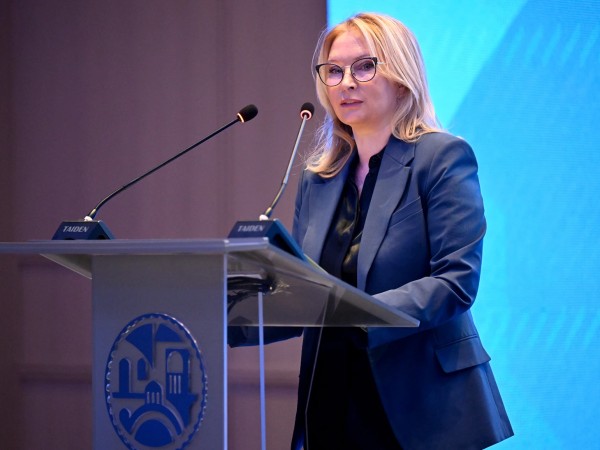


Tbilisi (GBC) - Deputy Minister of Economy and Sustainable Development Vakhtang Tsintsadze said on Wednesday that markups in trade supply chains in Georgia are quite high. “The average markup from the cost of production to the retail outlet is about 90%, and for certain products it increases by two times or more, excluding VAT”.
The deputy minister also stressed that local producers find it difficult to enter online markets, which is due to the contractual terms that online markets impose on them.
According to Vakhtang Tsintsadze, prices for comparable products in Georgia are 20% to 180% higher than in European online markets.
"The mentioned challenge is not new and is not limited to Georgia. Similar challenges have existed in European countries, including Georgia, and various countries have responded to it with various adequate mechanisms. Our goal is to study this issue in depth in order to respond to the challenge with appropriate adequate mechanisms," the Deputy Minister of Economy noted.
On December 24, Irakli Kobakhidze spoke about the high markup on products in Georgia and the financial burden imposed on suppliers.
According to Kobakhidze, the study shows that the financial profit of chain markets in Georgia is much higher than in Europe, in particular, the net profit margin of specific retail chains in Georgia is 7, 8 and even 14 percent, when the average net profit margin in Europe is 2%.
As of December 24, inflation in Georgia is 4.8%.
A 2023 study by the ISET research organization discusses that - government price controls can have several negative consequences. Among them:
- It often leads to a shortage of goods or services, - because the price is artificially lowered below the market equilibrium point, which, in turn, creates excess demand.
- In addition, imposing a maximum price limit can lead to a decrease in the quality of goods or services, as producers may begin to look for ways to reduce costs.
- Sellers can avoid the law by reducing quality instead of raising prices.
- Consumers may also have to bear the costs associated with searching for goods and services, such as long lines or the time spent searching for a product that is in high demand but in low supply.
- Typically, when paying a higher price than the established one is illegal, buyers find a way to pay more in the form of bribes, which ultimately increases the level of corruption.