Electricity exports in May fell by 73% due to falling prices in Turkey...
According to the document, last month, domestic consumption increased
by 3.8% year-on-year and amounted to 1.1 TWh, however, due to a sharp
decline in exports, total demand in the market decreased by 8.6% (to
1.2 TWh). The investment bank explains that May is historically an
export month, which is due to the seasonality of hydropower plants,
however, due to the forced limitation of generation this year, local
production has decreased by 9.5% annually.The sharp decline in exports
was caused by a decrease in prices on the Turkish market to a
historical minimum - an average of 1.8 US cents/kWh - which, as Galt &
Taggart researchers note, is associated with favorable hydrological
conditions and an increase in solar generation. The increase in solar
capacity in Turkey may maintain pressure on summer prices in the
future, although the effect will also depend on market and
hydrological conditions.According to data from the 5 months of 2026,
local electricity consumption in Georgia increased by 6.1% annually
and amounted to 6.2 TWh. The share of imports and thermal generation
in total supply was 36.3% (vs. 31.1% in 5 months of 2025). Increased
import dependence in January-April and reduced exports in May
highlight Georgia's seasonal challenges.Overall, the 2026 data
indicate the need to develop generation facilities that respond to
Georgia's seasonal challenges, such as reservoir hydropower plants and
wind farms. In addition, the data highlight the importance of
developing energy storage and export infrastructure.Domestic
consumption growth in all categoriesAccording to the Galt & Taggart
study, domestic consumption increased by 3.8% annually and amounted to
1.1 TWh. Annual growth was recorded in all segments: Abkhazia region:
+6.6% Direct consumers: +5.8% Retail consumers: +2.1% The increase in
consumption is associated with both climatic factors and the
activation of energy-intensive enterprises.In addition, in May 2026,
hydropower generation decreased by 9.9% annually and amounted to 1.2
TWh, which is 97.5% of total supply. The decrease is associated with
climatic conditions and, at the same time, generation restrictions
imposed by the system operator. These restrictions became necessary to
protect the balance between demand and supply. Without generation
restrictions, supply would exceed demand, including the local market
and exports.There is no publicly available information on the exact
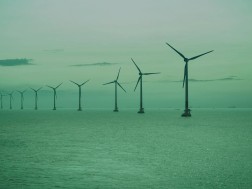
scope of the restrictions implemented in May.Wind and solar generation
grew by 55.8% year-on-year, although its share in total supply was
still a small 1%. The increase is associated with the commissioning of
the 18.7 MW “Zemo Wind Station” in April and new solar plants
added by the end of 2025 (totaling 10.8 MW).Thermal plants, in
accordance with the seasonality characteristic of May, were not
operating.Galt & Taggart researchers expect generation restrictions to
continue in June-July, although to a lesser extent,
because:Historically, June and July are characterized by less surplus
than May.ESCO has signed a barter agreement with Turkey, within the
framework of which it will export electricity to Turkey during
May-July, and import in September-November. This transaction will
increase the volume of exports and aggregate demand, thereby reducing
generation constraints in the June-July period.The export volume to be
implemented under the barter will be purchased by ESCO at 4.021 tetri
per kWh from power plants that would otherwise have to curtail
generation (as a result of the GSE decree). The exact commercial terms
of the barter agreement, including the proportion of exports and
offset imports, are not publicly known.
1782212807