
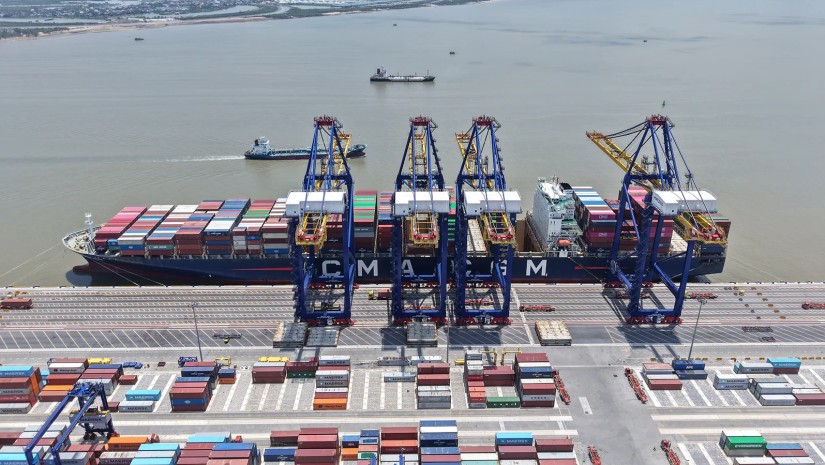

Tbilisi (GBC) – Georgian Prime Minister Irakli Kobakhidze said the government is continuing to fully modernize the country’s transport network, as evidenced by the start of construction of a new berth at the Port of Poti. The head of government made the remarks during a ceremony marking the launch of the project.
According to the Prime Minister, in recent years, the Middle Corridor has emerged as one of the most reliable routes between Europe and Asia, and Georgia has become a powerful economic and logistical hub that creates additional value for international trade.
“In the first five months of this year, cargo turnover in Georgian ports increased by 21%. As for the new Poti seaport, cargo turnover here has increased by 78% over the past three years. These figures clearly indicate that the demand for our transport corridor is growing very rapidly. Our task is to respond to this demand with modern infrastructure. That is why we continue to fully modernize the country's transport network: we are expanding ports, building the Anaklia deep-water port, and upgrading railway and road highways,” said Irakli Kobakhidze.
He expressed special gratitude to the US International Development Finance Corporation (DFC) and noted that the project unites the state, Georgian business and American financial institutions around a common goal. The Prime Minister also highlighted the success of the Georgian company developing the project, PACE Group, which shows that local business has the appropriate competence and resources.
$25 Million US Investment in Poti Port
According to the US Embassy in Georgia, the US Development Finance Corporation (DFC) has officially signed a second loan agreement with the Georgian company PACE Group in the amount of $25 million.
The financial resources will be used to complete the construction of the second berth of the new Poti seaport.
The economic impact of the project includes several key points:
- Increase in throughput: The port's throughput will increase by more than 1 million tons per year.
- Cargo diversification: The ability to process bulk cargo will significantly increase.
- Regional competitiveness: Critical infrastructure will be strengthened, which will make trade along the Trans-Caspian Corridor even safer and more efficient.