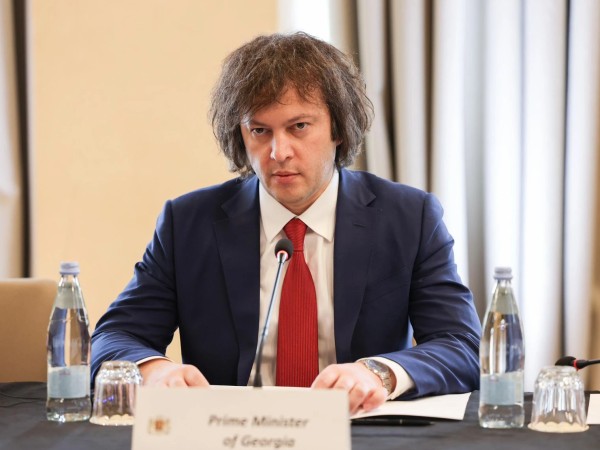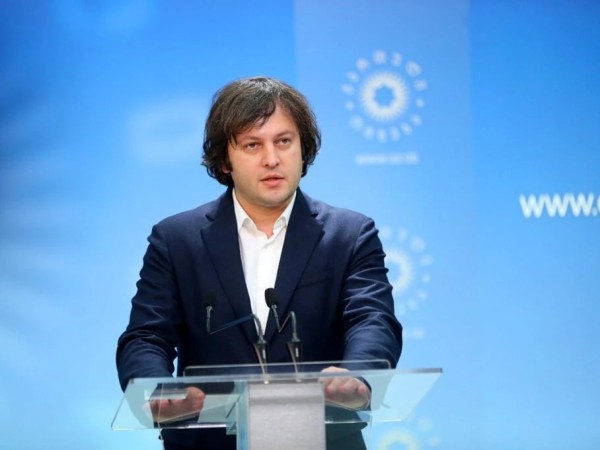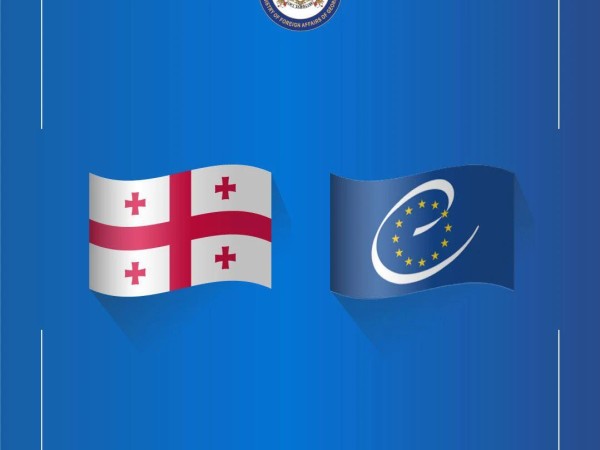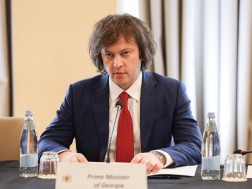
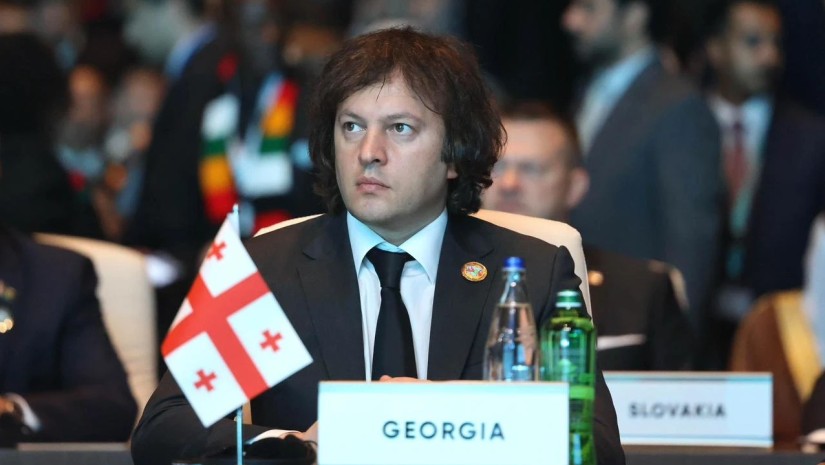

Tbilisi (GBC) - Georgian Prime Minister has written an open letter to the top leadership of the European Union, criticizing the police crackdown on a peaceful demonstration in the Danish capital Copenhagen and drawing attention to the “value crisis” in Europe.
The open letter, addressed to European Commission President Ursula von der Leyen, European Council President Antonio Costa and European Parliament President Roberta Metsola, was published after the political dialogue between Tbilisi and Brussels was unilaterally suspended. According to the head of government, the formats for discussion and cooperation proposed by Georgia were repeatedly rejected by the European bureaucracy, which forced the country’s leadership to resort to a public appeal.
In the letter, the Prime Minister asks EU leaders how they assess the events in Copenhagen, where, according to him, peaceful demonstrators were beaten with batons and dogs were used against them. According to the head of government, these actions contradict the standards of democracy and human rights that Europe was considered a benchmark for protecting.
“The current situation poses a danger that Europe may become a benchmark not for protecting these values, but for ignoring and grossly violating them,” the letter states.
According to the Prime Minister, the EU is currently in a “deep crisis of values,” which is manifested in democratic decline, economic stagnation, a migration crisis, as well as the weakening of national and gender identities. According to him, Georgia, as a candidate country for EU membership, expects a clear answer from Brussels about the union’s plan for managing internal crisis processes and the final results.
Chronology of Georgia-EU relations and the current crisis:
July 2021 – Annulment of the “Charles Michel Agreement”: The ruling party “Georgian Dream” declared the document signed with the mediation of the President of the European Council, which aimed at political reforms, null and void.
June 2022 – Postponement of candidate status: The European Council did not grant Georgia the status of candidate for EU membership (unlike Ukraine and Moldova). The country was given a 12-point recommendation for receiving the status.
March 2023 – The so-called The first protest of the “Russian law”: The ruling team first introduced the draft law on “agents of foreign influence.” This was followed by large-scale protests in Tbilisi of thousands and a stern warning from Brussels, which led to the government withdrawing the draft law.
December 2023 – Granting candidate status: Given the geopolitical context, the European Council granted Georgia the status of candidate for EU membership on the condition that the country fulfills 9 new recommendations.
April - May 2024 – Protests of thousands in Tbilisi: The re-initiation of the “transparency law” was followed by one of the most popular and continuous protests in the country’s history. The demonstrations lasted for more than a month, while Western partners warned Tbilisi that if the law was adopted, it would “block the European path.”
May 2024 – Final adoption of the law: Despite protests and vetoes, the parliament finally approved the law “On Organizations Representing the Interests of a Foreign Power”. Brussels stated that this step contradicts the fundamental values of the European Union.
June-July 2024 – Suspension of membership and sanctions: The European Council officially announced the suspension of Georgia’s integration process. 30 million euros of the Defense Fund (EPF) and direct budgetary support (121 million euros) were frozen. In October, Ambassador Pavel Herchinsky confirmed the termination of the high-level political dialogue.
October 26, 2024 – Parliamentary elections: Parliamentary elections were held, which the European Union described as a “referendum on the European course”. The CEC declared the Georgian Dream party the winner, prompting accusations of fraud from the opposition and civil society and a new wave of protests. The EU and Western partners have called for an independent investigation into election irregularities and have refrained from legitimizing the results.
Foreign policy review and diplomatic deadlock: The post-election political crisis has reduced the chances of resuming dialogue between Tbilisi and Brussels. The Georgian government accuses the European bureaucracy of unilaterally blocking bilateral formats, which has led the Georgian side to resort to open letters to European leaders and public criticism.